TriestEspresso Expo: Second Day of the Event Today, with a Packed Programme Continuing Tomorrow
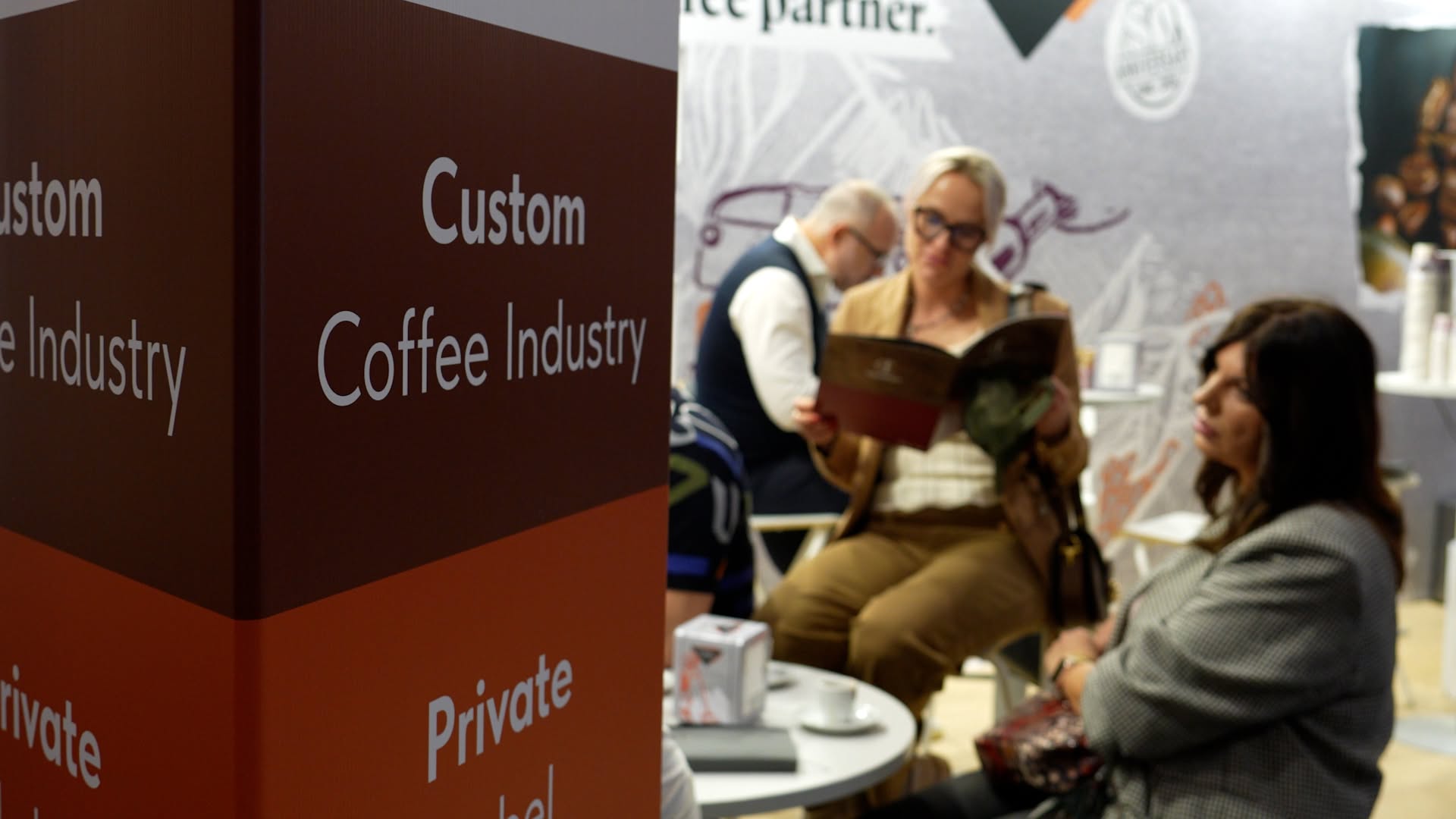
The second day of TriestEspresso Expo took place today, with the event continuing tomorrow at the Generali Convention in Trieste and a packed schedule of activities.
The event is organised by the Venezia Giulia Chamber of Commerce through its in-house company Aries, in co-organisation with the Municipality of Trieste, with the Trieste Coffee Association, the Friuli Venezia Giulia Region, Io Sono Friuli Venezia Giulia as partners, and the support of Bcc Venezia Giulia.
Throughout the day, competitions organised by SCA, the Specialty Coffee Association, took place, including the Northern Italy round of the Latte Art and Coffee in Good Spirits selections.
“These competitions are attracting increasingly high participation and are very much felt within the sector,” said Antonella Cutrona of SCA Italy. “Here at TriestEspresso Expo, the Latte Art competitions, featuring designs in milk, and Coffee in Good Spirits, involving coffee-based cocktails, are taking place. These selection rounds will lead to the national finals in Rimini.”
Two in-depth sessions were led by Beatrice Stock, Senior Training Specialist at the Università del Caffè, focusing on the evolution and technologies of espresso machines and grinder-dosers.
Today, TriestEspresso also hosted the presentation of CoffeeBI’s new CoffeeSights research covering 21 Central and Eastern European markets, from the Baltic countries to Turkey.
The picture is clear: while Western Europe is stagnant (+0.1% annual volume growth since 2021) and consumption fell by 2.6% over the past year, the East is growing by 2.4% annually in volume and 8.1% in value. In 2025, the region consumed 573,000 tonnes of coffee, worth €6.72 billion. Two countries, Poland and Turkey, alone account for approximately 42% of volumes, and Turkey is the fastest-growing market, at +11.5% per year. Coffee consumption habits are also changing. Whole beans and capsules are growing by more than 9% annually, while instant coffee is the only format in decline. Out-of-home consumption accounts for 19.3% of volumes but generates 30% of value, thanks to a price premium 1.79 times higher than that of at-home consumption. Within this segment, HORECA is the most dynamic channel, with annual volume growth of 11.5%, and has captured 77% of all the added value generated by out-of-home consumption since 2021.
In the professional machine segment, the East is growing at more than twice the rate of the West in terms of units (+5.5% compared with +2.2% annually). Super-automatic machines have increased their share of units sold from 53.8% to 64.6% over five years and now exceed the share in Western Europe, which remains at around 60%.
“The European coffee market is still growing, and growth is taking place in the East: in out-of-home consumption, in HORECA, in whole beans and in automatic machines,” commented Marcello Peluso, partner at CoffeeBI. CoffeeBI.com, a leader in coffee business intelligence for 15 years, will become part of CoffeeSights.com from 2027, the new market intelligence platform for the global coffee industry.
At TriesteCoffee Expo, discussions also focused on “PPWR: The Odyssey of Packaging”. Among the speakers was Luca Stramare, Director of the Centre for Studies on the Circular Economy Division at CONAI.
“The new packaging regulation is a very complex regulation that introduces many additional responsibilities compared with the past,” Stramare explained. “Previous legislation had focused on the end of life of packaging, whereas this regulation also addresses the design and use phases of packaging. It is important for companies to be aware of their role in the supply chain, understand the obligations arising from these roles and be prepared, because the deadlines are approaching very quickly. For this reason, CONAI has also developed a series of tools, particularly for the coffee sector, because, as of 12 August this year, coffee pods and capsules are considered packaging, whereas they were not before, and are therefore handled through separate waste collection.”
Another speaker was Guglielmo Destri, who presented the example of the path undertaken by Gruden Imballaggi Padova.
Today also provided space for various B2B sessions involving industry operators, visitors, exhibitors and international delegations.
One of the day's main events was the presentation of the AICS project “Towards a New Generation of Sustainable Quality Coffee Producers in Southern Tanzania”. This international cooperation initiative sees the Autonomous Region of Friuli Venezia Giulia acting as the implementing body, with the involvement of an important network of Italian and Tanzanian partners, under funding from the Italian Agency for Development Cooperation dedicated to local and regional authorities.
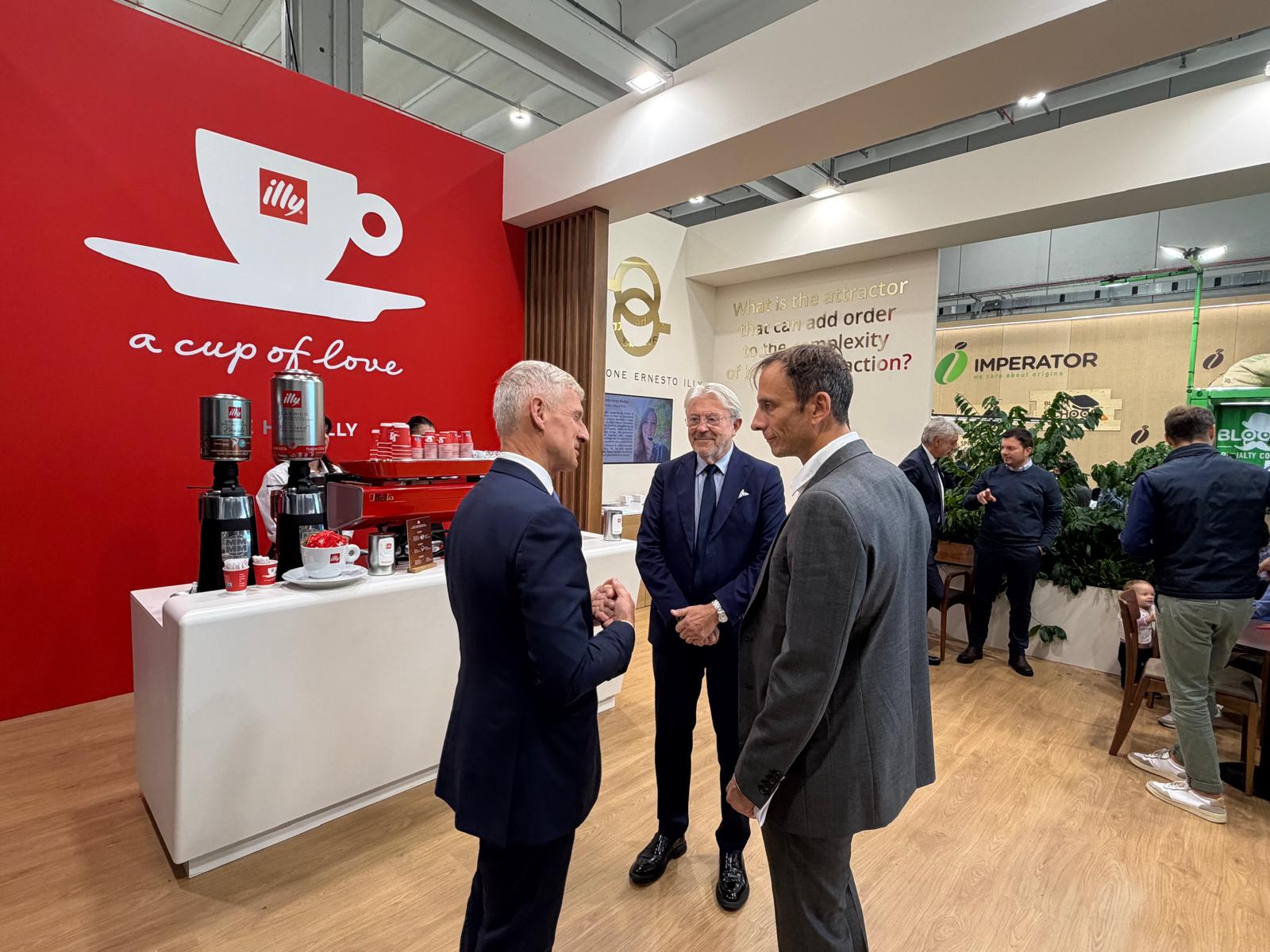
Following an introduction by Antonio Paoletti, President of the Venezia Giulia Chamber of Commerce, the project was discussed by the President of the Region, Massimiliano Fedriga, and Andrea Illy, President of illycaffè Spa, followed by several technical presentations.
The project was launched under the Italian Agency for Development Cooperation's call for proposals dedicated to local and regional authorities. This is an important element, as it demonstrates how regional administrations, by pooling expertise and partnerships, can make a concrete contribution to development initiatives in other countries.
The total investment amounts to more than €2.1 million for a three-year project launched in October 2025, with activities concentrated in three regions of Tanzania: Mbeya, Songwe and Ruvuma. The objective is ambitious but highly concrete: to support higher-quality and more sustainable coffee production, strengthen farmers' skills and create new economic and employment opportunities, especially for young people and women. The project brings together institutions, businesses, universities and international organisations.
The President of the Friuli Venezia Giulia Region, Massimiliano Fedriga, explained that the project “is an important signal because it represents the first case in Friuli Venezia Giulia of both institutional cooperation between the public and private sectors and collaboration within international cooperation, as well as an alliance between the national Government and the Region itself. The project has already achieved important initial results, moving towards more sustainable coffee production in Tanzania and, above all, guaranteeing new employment opportunities for young people and women. These include a scholarship awarded to a woman to help optimise production and reduce the environmental impact of coffee production, particularly in relation to wastewater, through investments in that territory. This experience has enabled the Friuli Venezia Giulia Region to work with the Government on two other projects, one in Ukraine and one in Kenya.”
Andrea Illy, President of illycaffè Spa, recalled that “we are talking about an international cooperation framework within which this project with the Friuli Venezia Giulia Region fits. The Italian Government has launched a Global Coffee Initiative, originally promoted by the G7 in 2004, which provides for a funding agreement to create resources for direct investment in coffee plantations and increase climate resilience. This stems from the forecast made more than 10 years ago that 50% of the land suitable for growing coffee would no longer be suitable because of the impact of climate change.
“Remedial action is therefore needed, improving agronomic practices, renewing plantations and potentially developing new production areas. However, this requires resources, given that plantations are predominantly in the hands of smallholder farmers: 12.5 million across 40 countries, half of whom live below the poverty line. All these cooperation programmes, not just initiatives from Italy, will therefore provide the investments needed to ensure the continuity of coffee production. Coffee is not only a good for those who consume it, but also a source of livelihood for the families who grow it.”
The second day concluded with the presentation and awards ceremony for the “2027 Guide to Coffee and Roasters of Italy”, curated by Andrej Godina and Mauro Illiano (published by Bibliotheca Culinaria).
“The Guide to Coffees from Italian Roasters is the first industry guide that the coffee industry has, in a way, equipped itself with,” explained Godina. “It started five years ago, and we are now at the fifth edition. This year, we chose Trieste, the Coffee Capital, as the setting for the presentation of the new edition, which will be available in bookshops next month and describes an extremely complex supply chain. We have carried out thousands of coffee tastings to enable consumers to enjoy choosing their favourite from among the many products available in Italy.”
Andrea Bulgarelli
Media & Communication Manager
TriestEspresso Expo
www.triestespresso.it
press@triestespresso.it
ph. +39 040 6701264
mob. +39 335 7824405
Micol Brusaferro
Press Office
mob. +39 3209718524